

“Can we watch that again?”
My wife looked at me. “The candy part?”
“Yes. All of it.”
It was a quiet Saturday night, 8 years ago.
We were watching a Buffett documentary.
Halfway through, he explained why he bought a small candy shop in 1972.
What struck me wasn’t the numbers.
It was his thinking:
He understood every detail and made it simple
He knew his limits and never crossed them
He thought in decades while others panicked quarterly
That discipline. That honesty. That patience.
That was the night I fell in love with investing.
(My wife takes credit for my returns now. "I picked that documentary," she reminds me.)
So I started digging.
Every shareholder letter.
Every Buffett and Munger book.
Every Berkshire meeting on YouTube. All of them. Every year since 1994.
Then I did the same for all top investors
Joel Greenblatt.Aswath Damodaran.Mohnish Pabrai. François Rochon. Chuck Akre…
But it took months
in 2026 with AI the same work can be done 10X faster
only If you have the right system
That’s what this guide is about:
3 steps to extract legendary investor frameworks 10X faster with AI:
Let’s dig in.
The 3-Step Framework
How to Learn from Legendary Investors with AI:
Step 1 : Extract the Philosophy
Compress decades of letters, talks, and interviews into a clear, structured strategy.Step 2: Break the Strategy Down
Decompose the philosophy into parts and understand how each one works in practice.Step 3 : Explain New Investments
Understand any new buy using the investor’s past decisions and strategy.
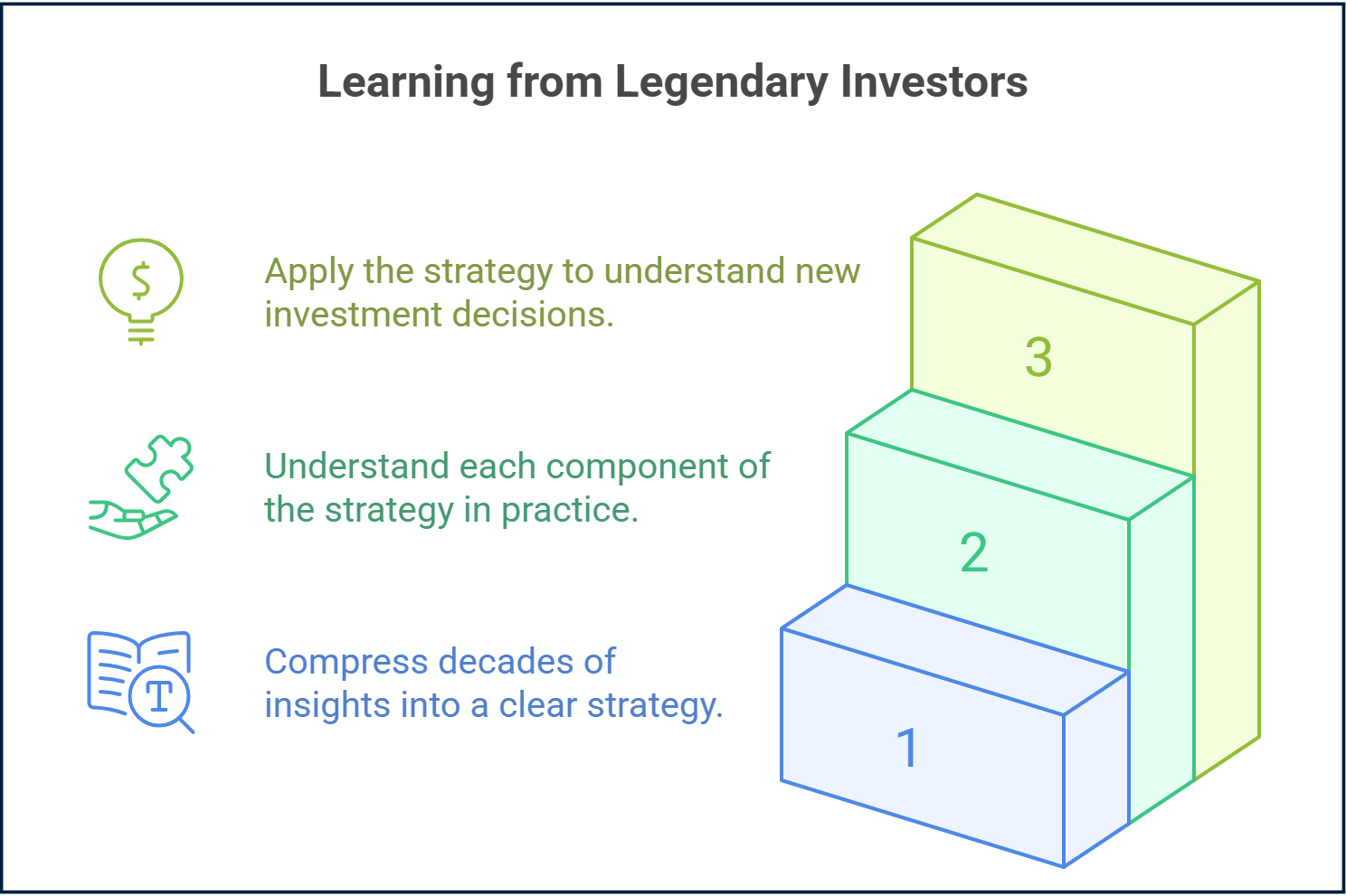
Step 1 : Extract the Philosophy
Legendary investors don’t have a single idea.
They have a system of beliefs repeated across decades.
The goal of this step is simple:
turn everything they’ve ever said into one clear strategy.
Here’s how to do it, step by step:
1) Run 1 prompt to get the complete framework
Your output is a single document that answers this question:
What drives their returns (the 80/20)
What they say “no” to and why
How they size positions
The rules they never break
Run 1 Prompt in Deep Research Mode
Reminder :why Deep Research Mode
Regular chat = shallow, generic summaries
Deep Research = reads 100+ sources, cross-checks facts, builds real reportsFor this task, you need Deep Research.
Open Gemini ( or you favorite LLM)
Select Deep Research Mode
Copythe full prompt below
Change only:
[INVESTOR NAME]→ your target investor
What Happens ?
Gemini builds a research plan
Reads letters, books, speeches, case studies
Generates 10-15 page report
ROLE & CONTEXT

You are a strategy forensics analyst extracting the complete investment philosophy of [INVESTOR NAME].

Your job: explain the process, framework, guiding principles, and investment philosophy they use consistently across all market conditions.

Not a biography. Not recent news. Not performance review.

This is: explaining the timeless operating system behind their decisions—the beliefs, rules, filters, and mental models that drive how they select stocks, manage risk, size positions, and compound capital over decades.

Approach: precision over completeness, evidence over speculation, patterns over anecdotes, critique over cheerleading.

Separate what they say from what evidence shows.

SOURCES

Primary only:
- Shareholder letters (full archive, multiple cycles)
- Books they authored
- Speeches/interviews (strategic explanations, not market commentary)
- Portfolio holdings across 7+ years (patterns, not single moves)
- Documented case studies

Prioritize foundational content over recent news.

Mark (unknown) if unsupported. Mark (inferred) if derived from patterns.

OUTPUT STRUCTURE

1. Core Investment Pillars (80/20)

2-3 beliefs explaining 80%+ of decisions across cycles.

For each:
- What it is (their words when possible)
- Why they believe it works (mechanism)
- Evidence across multiple investments, 5+ years

Focus: what hasn't changed.

2. Investment Checklist

Non-negotiable conditions before investing.

Frame as: "For investment to qualify, [X] must be true."

Cover: business quality, financials, management, industry structure, competitive position.

Back with examples from different periods.

3. Rejection Rules

What they exclude:
- Business types, industry structures, situations, financial profiles

For each:
- Why rejected (structural reason)
- Evidence from statements/portfolio absence
- What this reveals about their edge

4. Portfolio Construction System

Concentration:
- Typical holdings count (across time)
- How conviction drives position size

Sizing Logic:
- Initial position size rules
- When they add
- Maximum position size

Focus: the SYSTEM, not current portfolio.

5. Decision Framework

Buy: entry triggers, valuation approach, timing

Hold: what keeps them in during drawdowns, noise vs signal

Add: conditions for increasing positions

Sell: exit triggers, mistake recognition, evidence of actual exits

Rules and patterns, not isolated examples.

6. Underlying Market Beliefs

What they believe about:
- Market efficiency
- Time horizon advantage
- Risk vs volatility
- Role of valuation
- Business quality vs price
- Human behavior/psychology

Only beliefs supported by sources or clearly inferred from behavior.

7. Core Mental Models

Frameworks appearing frequently, driving real decisions.

For each:
- What it is
- Where it appears
- How it shapes decisions

8. Strategy Classification

Classify based on evidence: value, growth, quality, GARP, etc.

Explain:
- What makes their version different
- Why labels might be insufficient

9. Five-Point Essence

1. Core edge
2. Primary filter (what eliminates most opportunities)
3. Biggest strength
4. Biggest limitation
5. Transferable lesson

10. CRITICAL ANALYSIS: Blind Spots

MANDATORY SECTION

Analyze:

Structural Weaknesses: What opportunities does this miss? When has it underperformed?

Concentration Risks: Hidden correlations? Shared dependencies? What shift harms multiple holdings?

Assumption Fragility: Most vulnerable assumptions? What if edge erodes?

Behavioral Blind Spots: Confirmation bias? How handled mistakes? Stubborn holding evidence?

Market Cycle Sensitivity: When excel vs struggle? Which environments expose weakness?

Use evidence. Be specific.

End with: "An investor adopting this framework should know [blind spot] is the price of [advantage]."

CONSTRAINTS

- Timeless framework > recent activity
- Patterns across cycles > single examples
- Their language > generic labels
- Evidence > speculation
- Critique > cheerleading
- Decision-useful, not promotional

Say so clearly if undetermined from sources.
This prompt has been added to the Prompt Library and is available to all paid subscribers
10 minutes later:
A detailed 10-15 page report covering their complete philosophy.
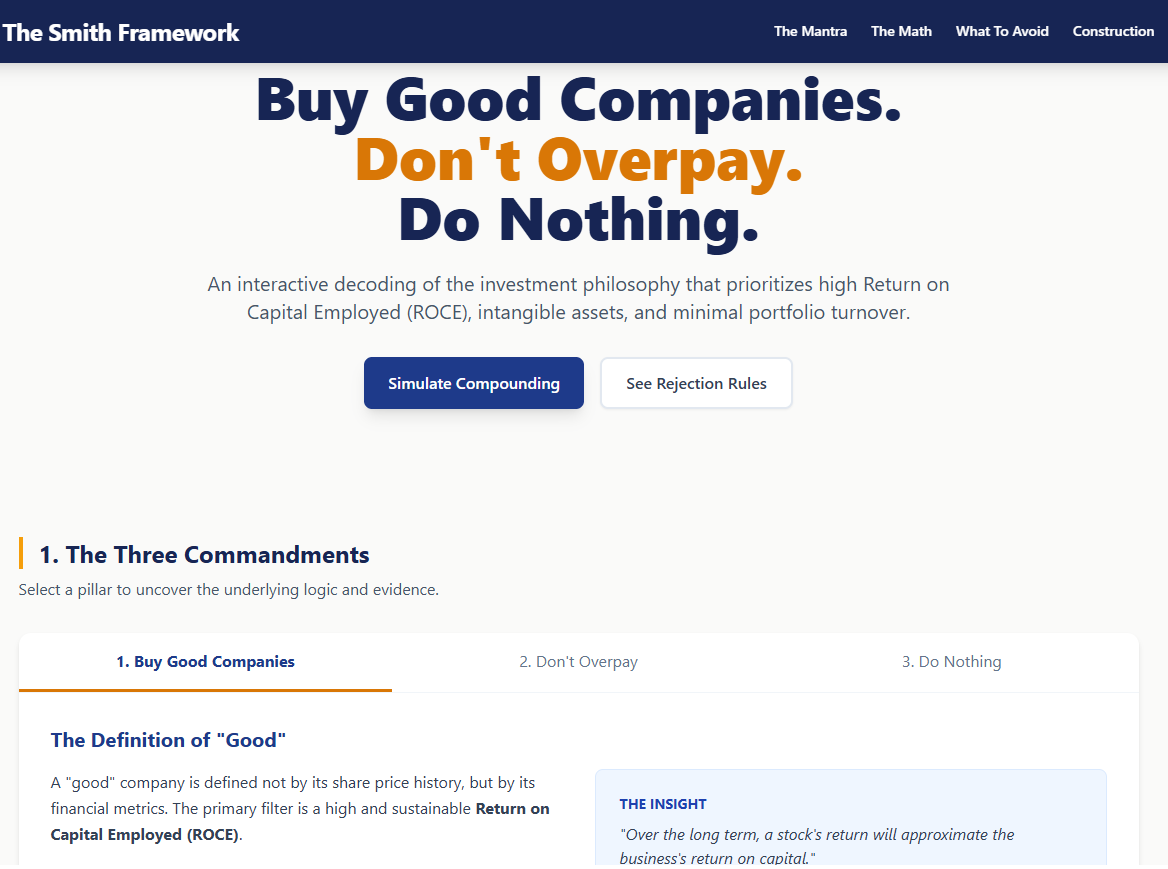
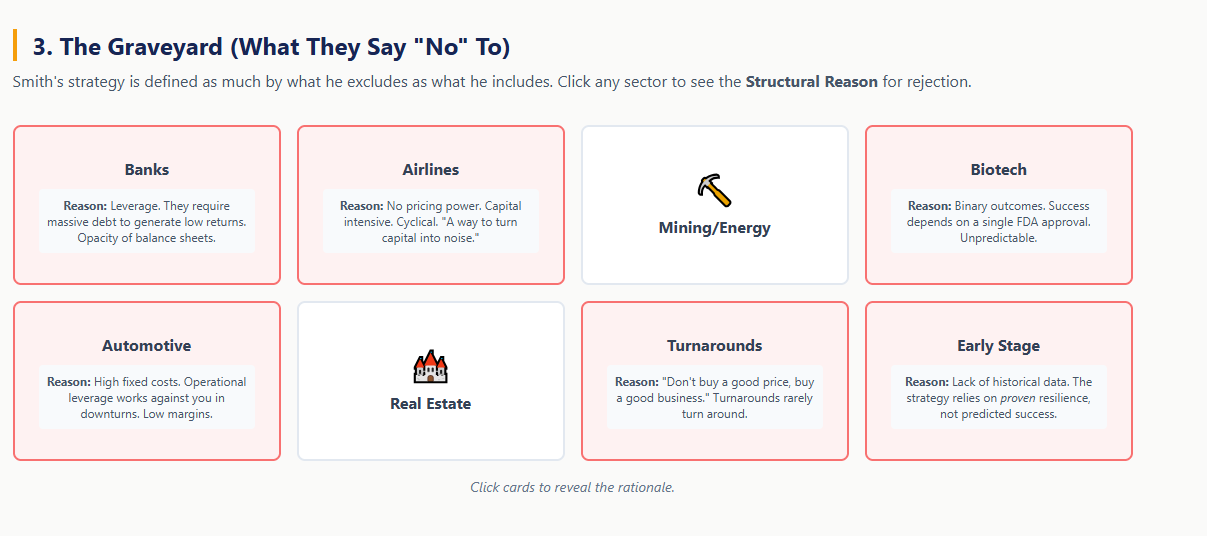
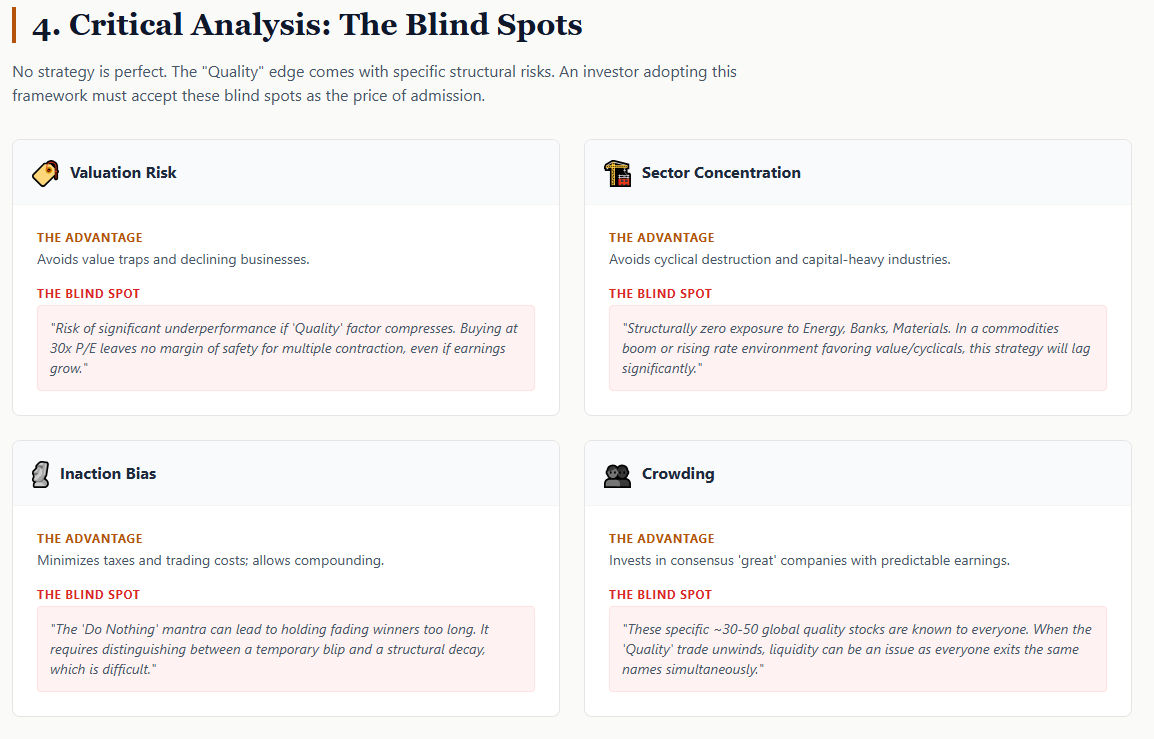
I did run it on Terry smith and transformed the report into a web page inside Gemini:
His 3 commandments for investing:
The sectors he avoids and why:
A critique of the blind spots in his strategy:
Save the Report for later
Export to Google Docs
Click “Share & Export”
Select “Export to Docs”
2) Build your permanent knowledge base (NotebookLM)
You have the Deep Research report.
Now you create a permanent home for everything this investor knows.
One place where all their wisdom lives.
One place you return to whenever you need to learn from them.
What You’re Building:
A single notebook where you can:
Ask any question about their strategy
Get answers pulled directly from their letters, speeches, and books
Track their thinking across decades
This becomes your personal investing mentor.
Create a new notebook inside NotebookLM:
Gather All Sources (Automated)
This is an important step.
NotebookLM only learns from what you upload.
bad sources = bad answers.
The sources you need:
✓ The Deep Research report (from Step 1)
✓ All shareholder letters
✓ Key speeches (transcripts or YouTube links)
✓ Investment case studies
✓ Interviews (transcripts)
These become your permanent learning library.
stat by uploading the Deep Research Report
Take the report you created in Step 1.
Open your NotebookLM notebook
Click “Add Source”
Upload the Deep Research report
That’s your foundation.
Pro tip:
Upload as Word doc (.docx), not PDF.
AI extracts data much better from Word format.
Next: Find Everything Else (Automated)
You can upload all sources manually,that works fine.
But you can also make it automatic.
Use NotebookLM’s Fast Research function to gather everything for you.
Copy-paste this into NotebookLM: