

Do you still read annual reports?
A question I got from a subscriber this morning.
Short answer: yes..
But not the same way I used to.
You might expect me to say, “Just let AI handle the whole thing.”
Nah. Not from me.
I believe in a hybrid investing process.
Let AI handle the mechanical work faster.
But the judgment still has to be yours
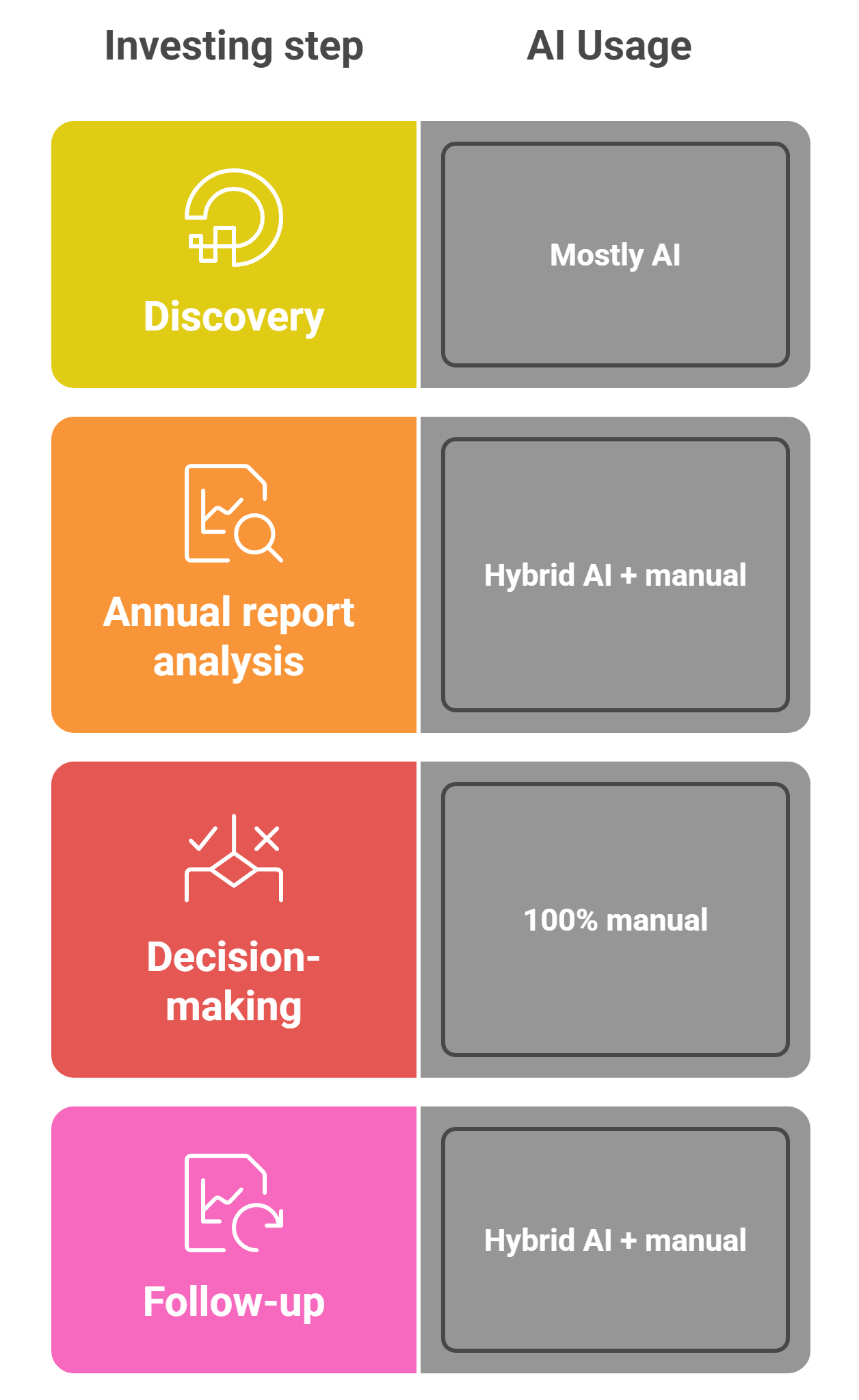
My investing process looks like this:
Discovery = mostly AI ( detailed in This artcile )
Annual report analysis = Hybrid AI + manual
Decision-making = 100% manual
Follow-up = Mostly AI, with selective manual review
In this article, I’ll show you 3 AI workflows I use to read annual reports faster and find the few details that can change how you see the business.
I ran it on Uber’s annual report.
It surfaced 3 things many investors would likely miss on the first read:
Uber reported $10B of profit, but a big part came from tax benefits, not from the core business.
Uber has a $1.8B UK tax issue tied to a court case that could hit earnings.
Uber’s cash flow looked stronger in 2025 because it recorded more insurance cost than it actually paid in cash that year
That’s exactly twhat I want AI to flag in 5 minutes, so I can spend my time digging into the few points that actually matter.
How to use AI to find the buried details in annual reports:
There are 3 ways to use AI for the same job: read annual reports faster and catch the buried details that can change the investment case.
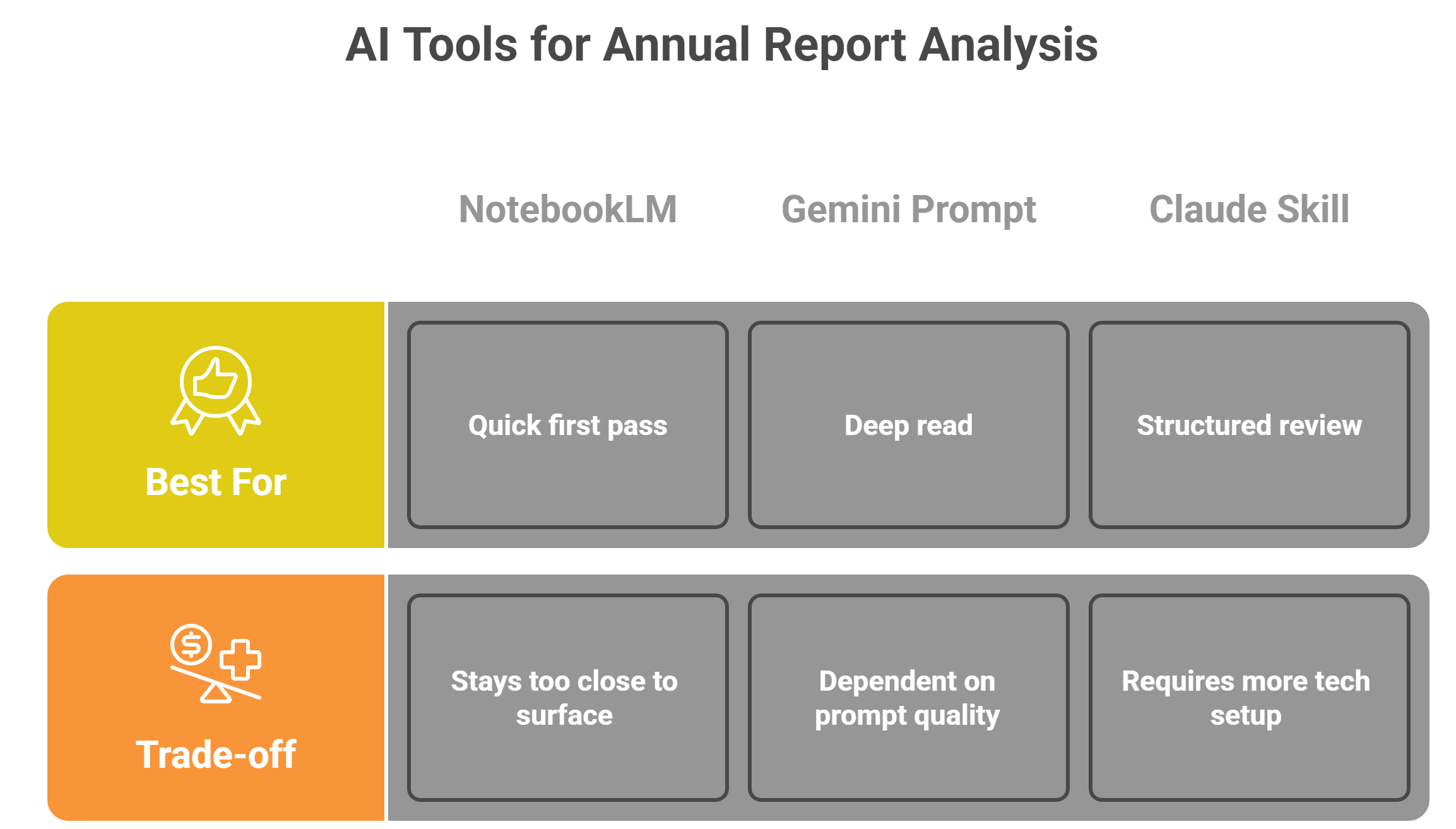
1) Using NotebookLM for a Fast Scan
Best for: getting a quick first pass and asking follow-up questions.
Trade-off: fast and useful and often the best first step before going deeper, but it can miss some buried details.
2) Gemini Prompt for a Deep Read
Best for: finding more of the buried details that NotebookLM can miss.
Trade-off: stronger output, but it works best when you give it a clear prompt and a manageable filing
3) Claude Skill for a Structured Review
Best for: getting the most reliable and repeatable version of that same job.
Trade-off: the strongest automated output, with a bit more setup upfront.
You can use any of the 3 depending on your experience with AI, your time, and how much depth you need.
But Mostapha which one should you use?
If you’re starting to use AI, start with NotebookLM.
Over time, you’ll find your own default.
Personally, I use all 3 depending on the stock, the complexity, and how deep I want to go.
Now let me show you exactly how to use each one.
Level 1 :Using NotebookLM
NotebookLM is useful because it stays tied to the source you give it, which makes it great for annual reports.
It runs on Gemini, but in my experience, it’s still less powerful than using Gemini directly when you want deeper work.
Step 1: Add the annual report as a source
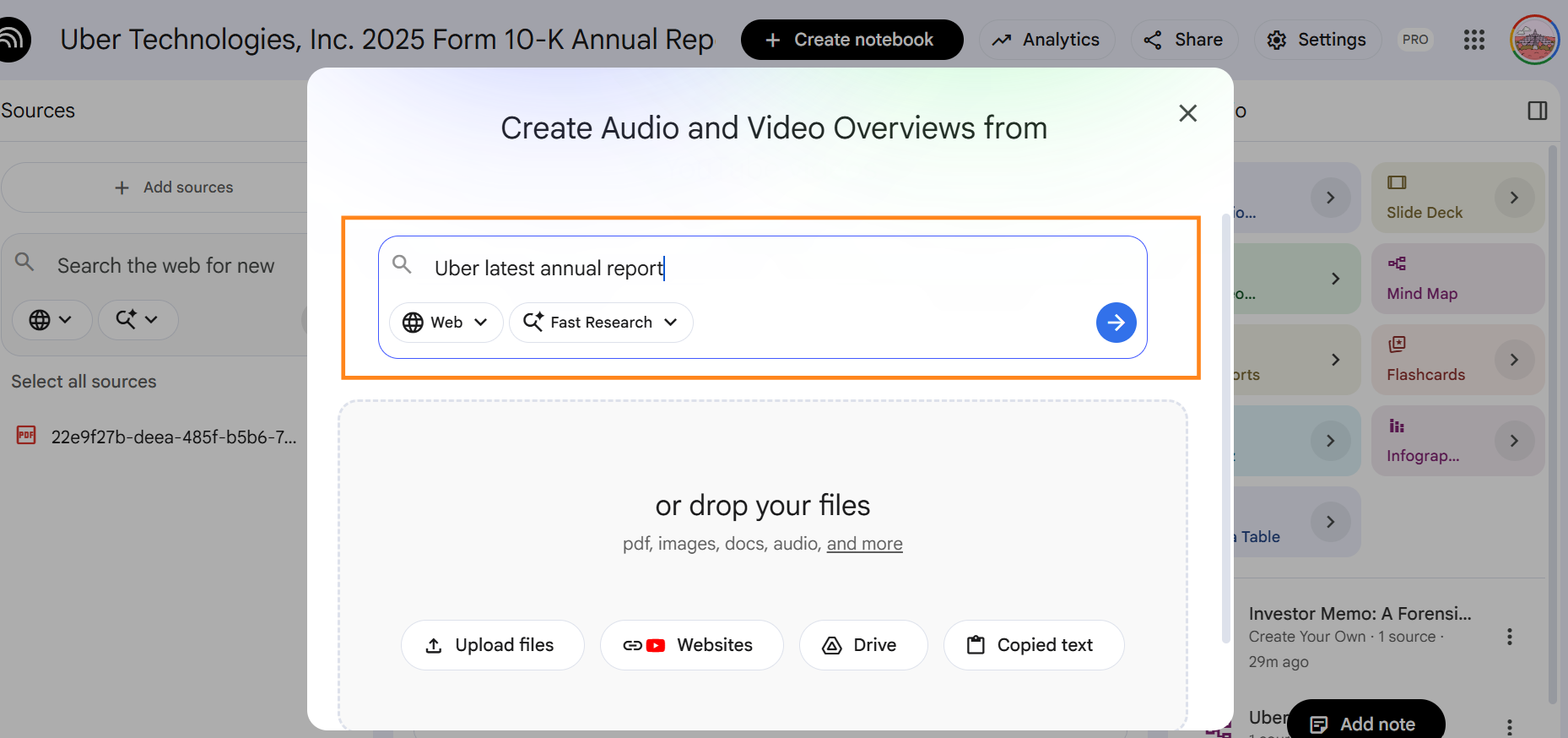
In NotebookLM, click Search the web for new sources
Type: “Uber latest annual report”
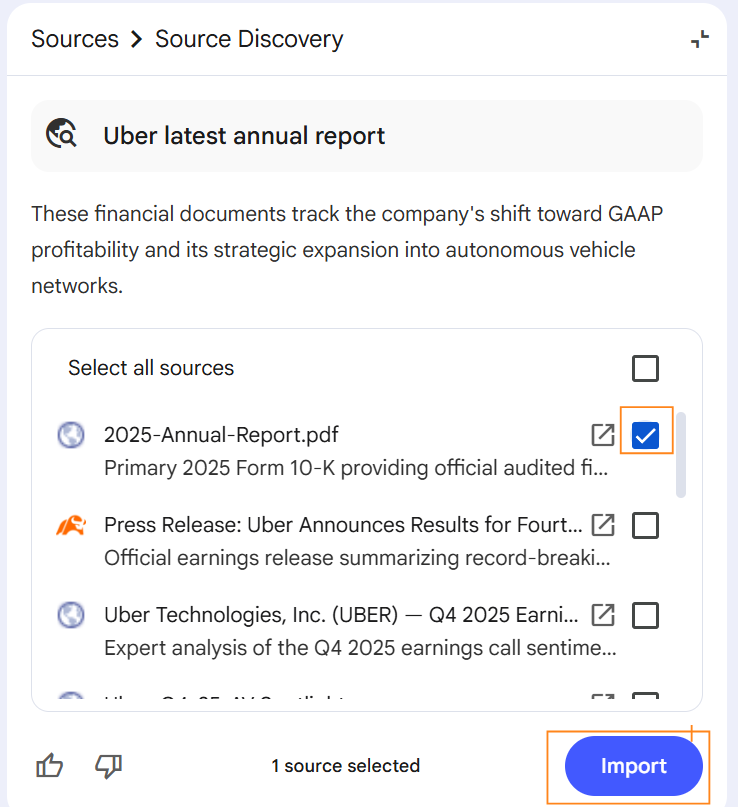
NotebookLM will suggest a few sources
Select the official annual report source
Then click Import
You can also add it manually by uploading the annual report yourself.
Step 2: Surface the buried details with a custom prompt
This is the key part: we are using the power of NotebookLM’s source-based answers and combining it with a strong prompt to crate a rport that shows the details most people miss.
Go to Reports,
Choose Create Your Own:This matters because it lets you use your own prompt and force a more useful structure, instead of relying on the default report templates.
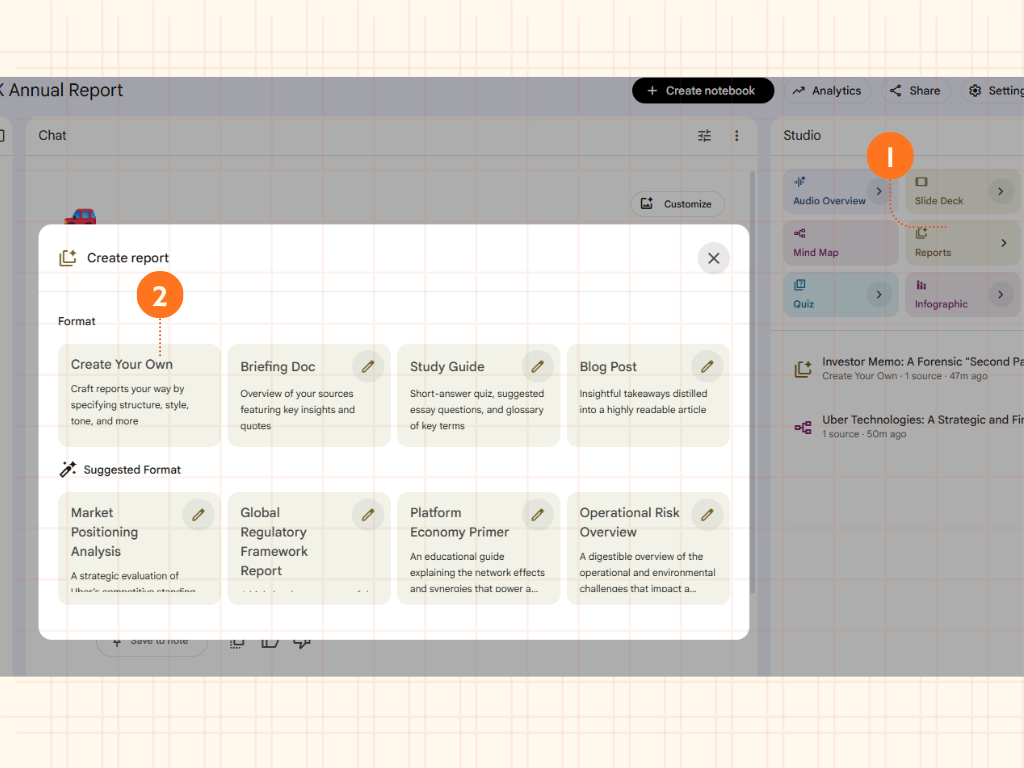
Paste the prompt below.
This prompt is built to do 3 things:
stop generic summarizing
force focus on the highest-signal buried details
turn the output into a usable investor memo
What the report flagged:
For Uber, it generated a 7-page report that looked like this:
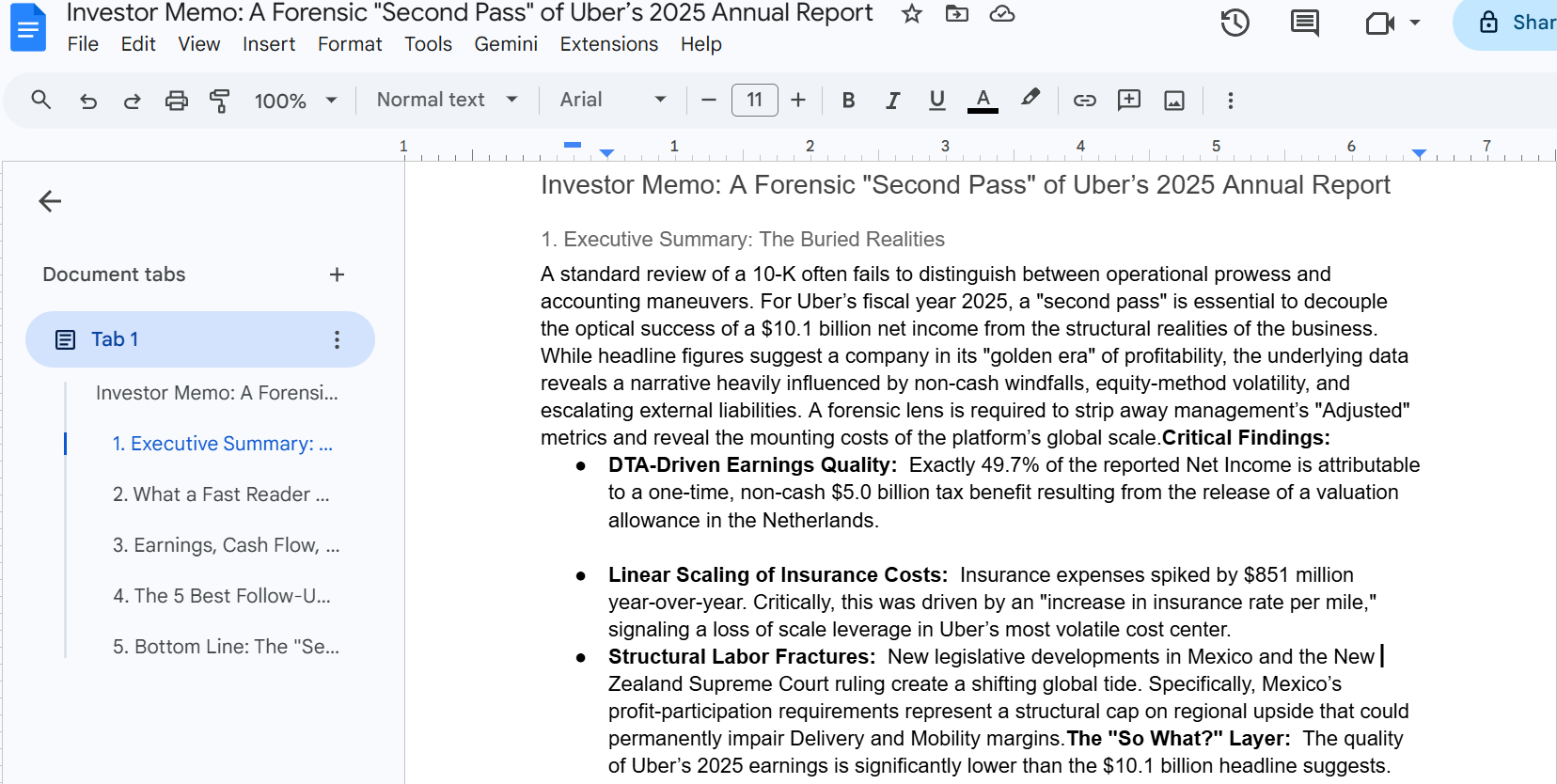
highlighting things worth paying attention to like:
reported profit was boosted by a large one-time non-cash tax benefit
insurance costs increased, which is an important pressure point to watch
These are exactly the kinds of things I want AI to flag quickly: details that can materially change the investment case.
Paste this prompt to generate the custom report: